
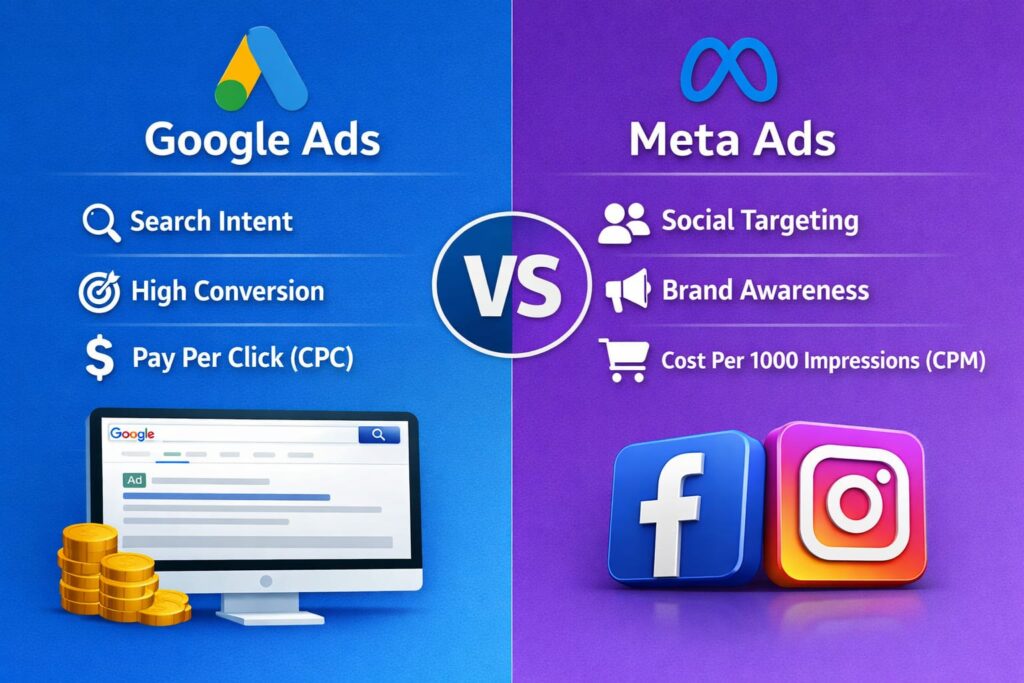
Google Ads vs Meta Ads: Which Is Better for Your Business?

In today’s digital world, paid advertising plays a major role in business growth. Two of the most powerful advertising platforms are Google Ads and Meta Ads (Facebook & Instagram Ads). But which one is better for your business? The answer depends on your goals, target audience, and budget.

What is Google Ads?

Google Ads allows businesses to show ads on Google Search, YouTube, and partner websites. These ads usually appear when users actively search for products or services.

✅ Best For:

High purchase intent customers

Local services (like clinics, agencies, freelancers)

Immediate leads and conversions

Search-based targeting

If someone searches “digital marketing services near me,” Google Ads can place your business at the top of search results.

What are Meta Ads?

Meta Ads run on Facebook, Instagram, and Messenger. These ads target users based on interests, behavior, demographics, and engagement patterns.

✅ Best For:

Brand awareness

Product promotions

E-commerce businesses

Visual storytelling

Meta Ads are powerful for building audience interest even before they start searching.


1️⃣ Intent vs Interest

Google Ads target users with intent (they are already searching).

Meta Ads target users based on interest (they may not be searching yet).

2️⃣ Cost

Meta Ads are often cheaper for awareness campaigns.

Google Ads may have higher CPC, but conversion rates are usually stronger.

3️⃣ Targeting Style

Google focuses on keywords.

Meta focuses on audience behavior and interests.

Which One Should You Choose?

✔ Choose Google Ads if you want quick leads and high-intent traffic.

✔ Choose Meta Ads if you want brand awareness and audience engagement.

✔ For best results, many businesses use both platforms together.

Conclusion

There is no single “best” platform — it depends on your business objectives. Google Ads works well for capturing demand, while Meta Ads help create demand. A smart digital marketing strategy combines both to maximize growth and return on investment.

Leave a Comment

Your email address will not be published. Required fields are marked *